
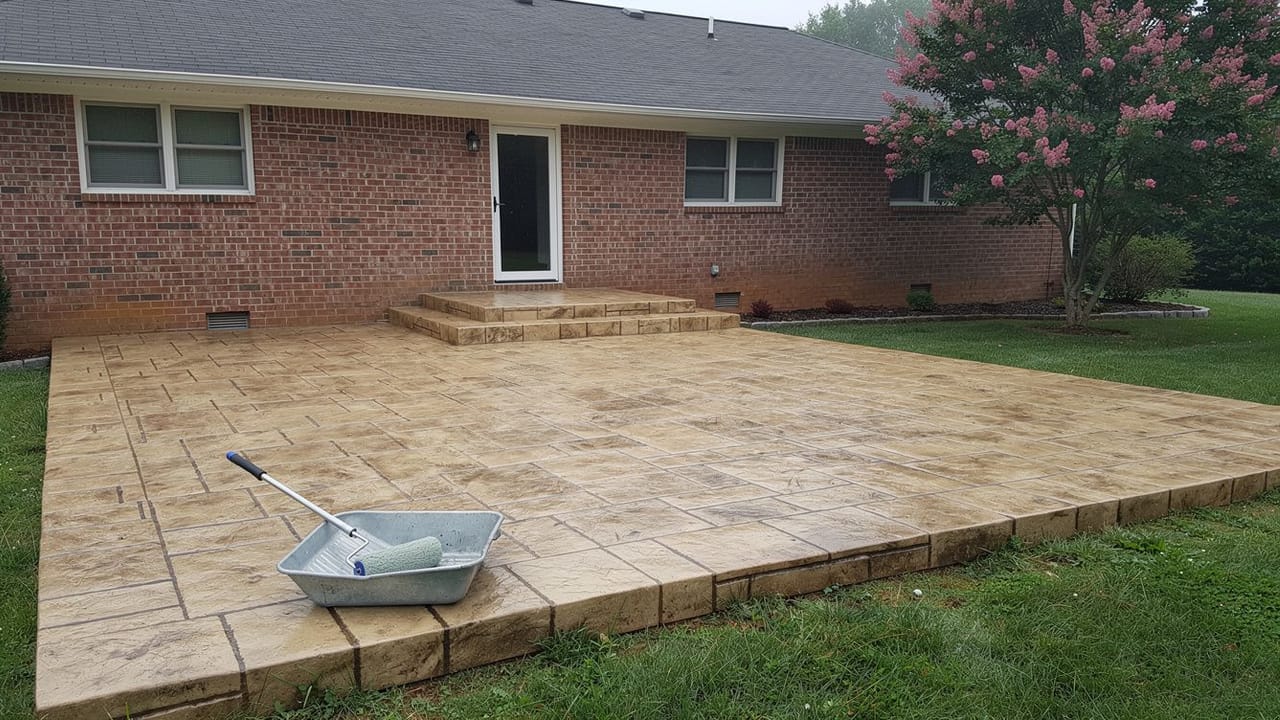
· by Michael Blair, Nashville's Concrete
Stamped concrete gets its color and texture while it is still wet, and then it is sealed. The sealer is the part that wears out. It is not maintenance free, and nearly all the upkeep a stamped patio or pool deck needs comes down to renewing that sealer at the right time and in the right way.
Why resealing matters
On most stamped work the color sits in the surface layer. The base color usually comes from a color hardener, which Euclid Chemical’s page for its Increte Color Hardener describes as a dry shake applied over freshly placed concrete. A colored release powder goes on before the stamps, and according to Euclid’s Increte Color Release page its iron-oxide pigment adds color and depth, with a darker release settling into the grout lines and deeper texture.
The hardener is sold as light-fast and UV resistant, so the sun is not the main threat to the color itself. The clear sealer over it protects against traffic, weather and de-icing salts and makes stamped color look deeper and richer, according to Euclid’s page for its Crystal Clear VOC cure and seal. When that film wears through, the protection and the richer look go with it.
When should stamped concrete be resealed?
Euclid’s troubleshooting bulletin for concrete sealers gives cure and seal products a life of one to three years and says to expect some peeling and flaking as they wear, most of all under heavy traffic or direct sunlight. A pool deck in full sun tends to come due before a shaded side walk. The same bulletin says not to reseal until the previous coats have worn away, so we judge by the surface: flaking at the edges and dull paths where people walk, not the date of the last coat.
The new coat has to suit what is already there. The bulletin says to use only sealers listed as acceptable for sealing existing, cured concrete, and Euclid’s guide to applying water-based sealers explains that a solvent-based film stays re-dissolvable after it dries while a water-based film, once formed, resists solvents, so the two behave differently. We follow the data sheet of the product going on and try it on a small corner first. Plain gray driveways are a separate question, covered in our post on sealing a concrete driveway.
- Reseal once the old coat has worn, by condition rather than calendar
- Clean thoroughly, then let it dry completely before sealing
- Use a sealer listed for existing, cured concrete and follow its data sheet
- Two thin coats rather than one heavy one
- Add a grit additive on steps and pool surrounds
The slipperiness problem
A glossy film over textured concrete can be slick when wet, and around a pool or on porch steps that matters. Manufacturers make skid-resistant additives for it: Euclid’s Increte Shur-Grip is a colorless, finely graded polypropylene grit that stirs into the sealer and leaves a finely textured surface, and its coarser Ultra-Grip, made for solvent-based sealers, is meant for places where the slip hazard is more severe.
Because the grit travels in the sealer, the sensible time to add it is during a reseal. Adding it later means rolling on another coat to carry it.
Why does stamped concrete sealer turn white?
Too much sealer is the usual culprit. The Decorative Concrete Council’s sealer guide says sealer is meant to go on in thin coats and that over-application can cause bubbling, cracking and whitening. The water-based guide says heavy applications or too many coats will often look milky white after drying, and that the same haze follows when the concrete or air is below 45°F, when it turns cold in the first 24 hours, or when rain or high humidity reaches the film before it forms. A cloudy film that is still bonded may be saved with a xylene solvent wash within the first 24 to 48 hours; one that will not come right has to be removed completely or left to wear away.
On stamped work the fix carries its own risk. The guide notes that scrubbing an over-applied sealer during a solvent wash may disturb or remove the pigmented antiquing in the joints and texture, the secondary colorant Euclid sells for stamped concrete that makes a stamped pattern read as stone. Thin coats in the right weather avoid all of it. If yours has gone white or patchy, ask us to come and look at it.
Sources
- Euclid Chemical, Technical Bulletin CP-05: Concrete Sealer Troubleshooting — Cure and seals last one to three years and wear most under traffic and direct sun; do not reseal until previous coats have worn away; use sealers listed for existing, cured concrete; two thin coats rather than one heavy coat
- Euclid Chemical, Technical Bulletin CP-24: Water Based Sealers, Guide to Successful Application — Solvent-based film stays re-dissolvable; heavy coats and cold, rain or humidity turn sealer milky white; 45°F minimum for 24 hours; solvent wash within 24 to 48 hours; scrubbing may remove antiquing on stamped concrete
- American Society of Concrete Contractors, Decorative Concrete Council: Concrete Sealer Expectations & Maintenance Guide — Sealer is meant to be applied in thin coats; over-application can cause bubbling, sealer cracking and whitening; follow the label coverage rate
- Euclid Chemical, Increte Color Hardener — Dry shake over freshly placed concrete, the base color for stamped concrete; light-fast, UV resistant
- Euclid Chemical, Increte Color Release — Colored release powder applied before stamping; iron-oxide pigment adds color and depth and recesses into grout lines
- Euclid Chemical, Increte Crystal Clear VOC — Clear sealer protects against traffic, weather and de-icing salts, deepens stamped color, can be tinted
- Euclid Chemical, Increte Shur-Grip — Colorless, finely graded non-slip additive for sealers that leaves a finely textured surface
- Euclid Chemical, Increte Ultra-Grip — Larger-particle non-slip additive for solvent-based sealers where slip hazards are more severe
- Euclid Chemical, Topical Concrete Colors — Increte Antiquing Agent sold as a secondary colorant for stamped concrete
FAQ
What Stamped Concrete Needs to Stay Looking Good — questions
How often does stamped concrete need sealing?
Euclid Chemical’s sealer troubleshooting bulletin puts the life of a cure and seal at one to three years, with the most wear where traffic is heavy or the sun hits directly, so a pool deck in full sun usually comes due before a shaded walk. Reseal when the old coat has worn away rather than on a set date, because coats stacked on top of each other are what turn cloudy and start to peel.
Can stamped concrete be recolored?
To a degree. Some clear sealers made for stamped work can be tinted, and antiquing agents are sold as a secondary color for stamped concrete, so a faded tone can often be refreshed. A large change of color is harder to predict, because the result depends on what is already on the surface, so we try it on a small area first.
Is stamped concrete slippery?
A sealed surface can be slick when wet, which matters most on steps and around pools. A fine, colorless grit additive mixed into the sealer leaves a finely textured, more slip-resistant finish. Because the grit goes on with the sealer, the time to add it is when the surface is being sealed or resealed.
Can you seal concrete in cold weather?
Not well. A water-based sealer applied when the concrete or air is under 45°F, or that turns cold in its first 24 hours, will often dry milky white, and rain or high humidity reaching it before the film forms does the same. On stamped work, scrubbing out that haze can lift the antiquing, so we wait for warmer, drier days.